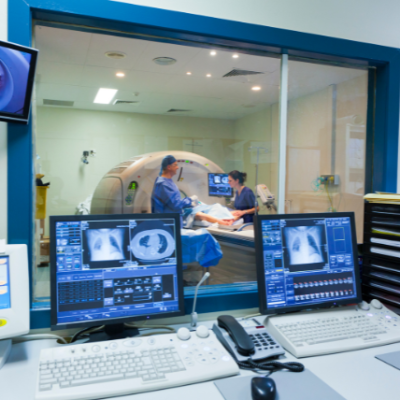
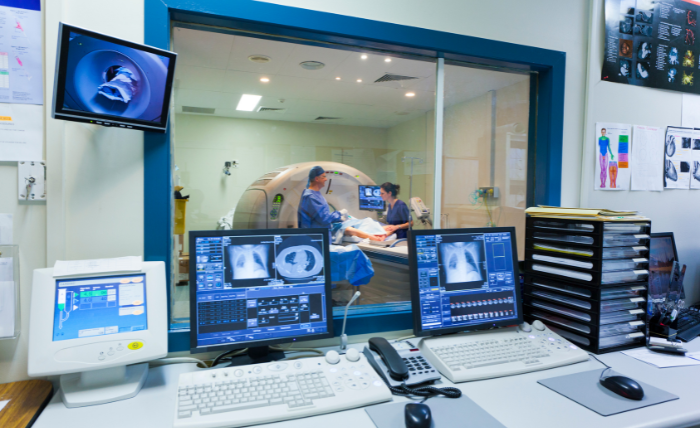
Hospitals operate 24×7, never shutting down and never compromising on reliability. This makes healthcare facilities some of the most energy-intensive buildings in the world. Large heating and cooling loads, sterilization systems, imaging equipment, data centers, and life-critical infrastructure collectively drive enormous energy consumption.
Globally, the healthcare sector contributes around 4.4% of total greenhouse gas emissions, while rising electricity tariffs and fuel costs continue to strain operational budgets. At the same time, modern medical technologies demand even more power, forcing hospital operators to rethink how energy is produced, managed, and consumed.
At Sustenergy Solutions, we see a clear shift underway:
all-electric hospitals are emerging as a future-ready solution that delivers cost savings, operational resilience, and long-term sustainability, often with payback periods under five years.
The Strategic Shift to All-Electric Hospitals
Electrification is not just a technology upgrade—it is a fundamental change in how hospitals operate. Moving away from fossil-fuel-based heating and legacy utility systems requires new planning models, new skills, and new digital infrastructure.
Successful electrification programs share three critical elements:
- Strong digital and automation foundations
- Microgrid-based energy architecture
- Phased implementation with continuous training and optimization
Hospitals that approach electrification as a system-level transformation—not a collection of isolated upgrades—unlock the greatest value.
Why Hospitals Are Moving Toward Electrification
1. Rising Energy Costs Demand Action
Many hospitals have experienced electricity cost increases of 20–25% or more in recent years. In an environment where margins are already tight, incremental efficiency improvements are no longer enough.
Electrification offers a structural solution by:
- Eliminating fuel price volatility
- Reducing long-term operating expenditure (OpEx)
- Improving predictability of energy costs
While government incentives and utility rebates help, the primary business case is built on lifecycle cost reduction, not subsidies.
2. Higher Electrical Demand, Stronger Economics
Converting a hospital to all-electric typically increases electrical demand by 2 to 2.5 times compared to traditional designs, and even more in extreme climates.
This requires:
- Upgraded electrical infrastructure
- Higher upfront capital expenditure (CapEx)
- Advanced energy management systems
However, these investments are offset by:
- Lower fuel and maintenance costs
- Improved system efficiency
- Faster operational payback—often within five years
3. Reduced Maintenance and Operational Risk
Electrified systems generally:
- Require fewer mechanical components
- Reduce combustion-related failures
- Lower safety risks for staff and patients
Hospitals that have transitioned report fewer unplanned outages and greater operational stability—critical in a life-critical environment.
Electrification and Sustainability Impact
Electrification dramatically reduces emissions by removing on-site fossil fuel combustion. One North American hospital projected a 50% reduction in greenhouse gas emissions over 25 years after electrification.
Beyond emissions, all-electric hospitals are better positioned to:
- Integrate rooftop and on-site renewable energy
- Deploy battery energy storage systems
- Participate in demand response and grid support programs
Once electrified, future capacity expansions or technology upgrades can be implemented with minimal disruption to core infrastructure.
Challenges Beyond Cost (and How to Solve Them)
Space Requirements
All-electric systems may require 20–30% more electrical and mechanical space compared to traditional systems. This can be challenging in urban hospitals or legacy facilities.
Early-stage planning and optimized equipment layouts help address this constraint.
Grid Dependency and Reliability
Hospitals cannot rely on a single utility source.
This is mitigated through:
- Microgrid architecture
- On-site generation and energy storage
- Redundant electrical pathways and controls
A well-designed microgrid allows hospitals to operate in both grid-connected and islanded modes.
Safety and Compliance
Battery storage and high-capacity electrical systems require:
- Enhanced fire protection
- Life-safety system integration
- Regulatory coordination
With experienced engineering partners, these challenges are manageable and well-understood.
Energy Efficiency as the Foundation
Electrification is most effective when paired with deep energy efficiency measures.
Digitalization and Automation
Advanced building automation systems, digital twins, and energy modeling tools provide:
- Real-time visibility into energy use
- Predictive insights for optimization
- Continuous performance improvement
At SSGDN, every electrification roadmap begins with data-driven energy baselining.
End-Use Optimization Opportunities
Hospitals offer numerous opportunities to reduce demand:
- Smart patient room controls
- Occupancy-based HVAC and lighting
- LED lighting retrofits
- Electric kitchens and sterilization systems
- Optimized EV charging for ambulances, staff, and visitors
Each measure compounds the benefits of electrification.
Supply-Side Optimization with Microgrids
Electrification transforms not only consumption—but also energy supply.
Hospitals can:
- Install on-site solar and renewable generation
- Use battery storage for peak shaving
- Shift loads based on time-of-use tariffs
- Participate in utility demand response programs
- Provide grid services without compromising reliability
All of this is orchestrated through a microgrid control system that continuously optimizes performance in real time.
Making Electrification Work in Practice
Electrifying a hospital is a high-visibility, mission-critical initiative. Success depends on:
- Early engagement with clinical, facilities, and operations teams
- Clear definition of performance goals
- Robust digital infrastructure
- Phased execution with continuous training
- Ongoing performance monitoring and optimization
One of the most overlooked success factors is data. Reliable, high-resolution data enables intelligent control, optimization, and long-term value creation. Electrification without digital readiness limits the return on investment.
The Future of Healthcare Is Electric
The case for all-electric hospitals is no longer theoretical. Leading healthcare systems are already adopting electrification as the standard for new construction and major retrofits.
With energy prices rising, sustainability targets tightening, and technologies maturing rapidly, electrification represents a practical, resilient, and economically sound path forward.
At Sustenergy Solutions, we help healthcare organizations design and implement future-ready, all-electric energy systems—built on efficiency, resilience, and intelligence.